

Childrens Bunk Beds With Mattresses Must Be Safe
Bunk beds are an excellent solution to save space. It's important that bunk beds with stairs or ladders are securely fastened.
Additionally, mattresses must be low-profile so that the mattress surface for children's bunk beds is at least 5 inches below the top of the rails. Some bunk beds come with trundles that can be used to accommodate three people making them ideal for sleepovers or guests.
Size
Bunk beds are popular spaces-saving solutions for children's bedrooms. By stacking beds vertically, they provide more floor space to accommodate other furniture like wardrobes and desks. Bunk beds are also great for dormitories and rooms that are shared because they save valuable space for siblings who share a room.
When deciding on a bunk bed for your child, think about their age and their ability to safely climb to the top level. Bunk beds should not be considered until the age of six. Even then, you should follow the safety guidelines provided by the manufacturer. These include sturdy guardrails, a sturdy ladder, and a sufficient height clearance from the ceiling.
The size of the mattress on the bunk bed is another crucial aspect to consider. Bunk mattresses come in either full or twin sizes, and it's essential that they fit snugly within the bunk frame. Gaps can cause impingement and can affect the stability. Select a mattress with an innerspring, hybrid memory foam, or hybrid construction for your child's the comfort and support they require.
In addition bunk bed mattresses must be at least 8-14 inches in thickness to comply with the safety guidelines for children. Mattresses that are too thin can cause it to slide down or roll out of the top bunk, which can be a risk for children who are just starting out. You can also choose a bed that has an integrated ladder to make it easier for you to access the top bunk.
Height
Bunk beds make a great option for rooms for children as they can provide additional storage space and free up space on the floor. However, before purchasing a bed, it's crucial to think about the size of the bed since this could impact the security and comfort of the mattress. For instance, a bunk bed must comply with British safety standards and the rails should be at least 16 cm taller than the mattress to prevent children falling out of bed.
Consider the height of ceiling fixtures, like lights and fans when selecting a bunk bed. These can impact the overall height. Also consider whether you plan to make use of a ladder or steps to climb up the top bunk, as these should be sturdy and strong or secured securely to prevent them moving and creating danger.
It is important to select the mattress that has a low profile, since this will allow the safety rails at the top bunk to be elevated higher. This is crucial because the more thick the bed, the higher the mattress will be. This could block your child's vision and make it harder for them to fall out of the bed.
Another thing to think about is whether you'll be using twin or full-size mattresses on the bunk bed. If you're looking to maximize space for your kids, a full over twin configuration is ideal since it will allow both kids to have their own bed, while giving plenty of space for storage beneath. If you plan to use a King-sized mattress on the bottom level, it is best to consider specialist frames designed for this kind of arrangement. They will be more sturdy than the standard bunk bed frames.
Weight
Bunk beds with mattresses are an excellent solution for families with children who share a room or limited floor space. They maximize space by fitting two beds in the same space and also providing storage space with built-in cubbies or storage drawers.
When selecting a bunk bed that has mattress, you should consider adhering to strict safety standards. This includes solid guardrails for the top bunk, as well as a sturdy staircases or ladders that are connected to the frame using anti-slip features. A bunk bed's slat construction should also have ample spacing to prevent entrapment dangers.
If children are sharing the top bunk, pay particular attention to the bed's capacity for weight and ensure it is able to accommodate each occupant without exceeding the limit. This is crucial to avoid structural problems or weaknesses that could compromise the safety and stability.
While it's tempting for children play on their bunk bed (or even climb up the ladder during time of play), remember that they're still not yet able to develop a sense of caution that will guide their actions when they are on a high-level surface. childrens bunk bed with trundle who are older than 6 are typically at a point where they are ready to sleep on the top bunk. However, you, as a parent, will need to decide if your child's ready.
When selecting a bunk bed with a mattress, opt for an all-foam mattress to limit disturbances in the night. Additionally, think about a mattress that has cooling technology that keeps the bunk bed cool and comfortable, especially during warm summer nights when hot air rises.
Cooling
Bunk beds are a fashionable and space-saving sleeping arrangement however, it's not as easy as strolling into a shop and purchasing the first mattress you see. Mattresses for bunk beds for kids need to have special features that ensure the safety of a sound and safe sleep, particularly for children who sleep on the top bunk. They need to be thin enough to meet the federal standards for flammability, and thick enough to keep children from falling off the top bunk and becoming injured. Furthermore, they should be lightweight and low profile which allows them to fit within the frame of the bunk bed.
When looking for a bunk bed mattress, it is crucial to check its thickness, as well as the material used to make it. It is generally recommended to select a mattress that is at least 6 inches thick. This will ensure that the mattress does not rise above the safety railings on the top bunk, and that they can't be pushed out without being caught. The thickness of a mattress for a bunk bed is important as it will help determine how much headroom your child will have on the top bunk.
Another thing to think about when choosing a bunk bed mattress is whether or not you'd like it to be a firm or soft mattress. A mattress that is soft will be more comfortable, but more firm ones will provide better support for the spine of your child's. cool childrens bunk beds is also important to take into consideration the amount of storage that the mattress offers. A bunk bed that has a storage option will let you keep your child's bedroom clean and organized, and it may even help them stay more productive in school.
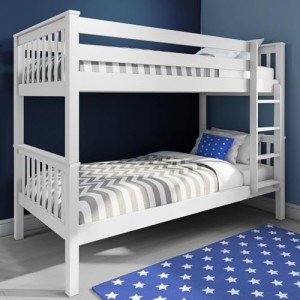
Safety
Like any other furniture for children, bunk beds with mattresses must be constructed in a way that is safe to avoid injuries and accidents. Examine the stability of the bed by examining all the key elements of the structure like the corners where the bed base and feet are fixed to the frame. Make sure all of them are securely fastened and that there is no movement or instability at any point.
It is also crucial to check that the foundations of the bunk mattresses are strong enough to withstand your child's weight as well as the weight of their sibling who will be sleeping on the top. You can test this by applying pressure on the bed at various angles and seeing if it is able to move or shift. If it does, this is not a good sign, and you will need to replace the mattress foundation.
Once the bunk bed is set, you should also make sure that you ensure that the area around it is free of hazards for tripping. This means making sure that any furniture that's not necessary for the bunk is removed away from the room. Also, you should not allow rough play or jumping on the bunks. You should also be clear that only one child may sleep on the bed at one time.
It's also a good idea to get your kids into the habit of removing toys from the area around their bed on a regular basis. This will reduce the risk of tripping and suffocation risks that can occur when kids climb up and down their bunk beds. It's important that you emphasize that these rules must be adhered to regardless of whether guests are visiting for the night.